Stories
“U!REKA became an international community of highly committed people.”
Looking back at the origins and development of U!REKA, what do you consider to be its most significant achievements?
Riitta: “Of course, the Erasmus+ certification for the U!REKA SHIFT -project to targeting to an European University alliance is a very significant achievement. We made three attempts to secure it, and it’s good that we persevered and kept believing we would succeed. Because to ensure U!REKA remains relevant in the long term, that certification – and the funding that comes with it – was essential. This approval puts us at the forefront of European education. The fact that we’ve achieved this as a European University comprising universities of applied sciences makes it all the more remarkable. Until then, the European Commission had mainly regarded universities as the educational institutions capable of delivering societal added value. It remained rather sceptical about what universities of applied sciences could contribute to European society. But in the meantime, with U!REKA, we are increasingly succeeding in reversing that misconception.”
Geleyn: “To add to that: the awareness that applied scientific research can have a significant societal impact and is not inferior to, but rather complementary to academic research is also quite new. And we at U!REKA have had a strong influence on that. That in itself is an achievement. Furthermore, I consider the fact that, in just a few years, U!REKA has become a genuine international community of highly committed people who drive the organisation forward and keep it moving to be an equally significant achievement. To secure European recognition, we had to reinvent ourselves to some extent, but we have remained true to ourselves and to our story. We did not enlist the ‘McKinseys of this world’ to obtain recognition at any cost. And we have maintained that approach in our search for partners: decisive factors were obviously common interests, shared characteristics – such as the urban context – and complementary added value, but as much was the chemistry between the various organisations and people.”
What do you think the U!REKA European University can offer to European cities shifting towards climate-neutrality? What is the real impact and added value of U!REKA in this matter?
Riitta: “It’s not easy to put that into very specific terms. The theme of sustainability is addressed in various ways within every degree programme at all partner institutions. This has been achieved partly thanks to the initiative of U!REKA. But that is, of course, merely the foundation, a first step. In addition, the themes of sustainability and climate neutrality also feature prominently in the open courses we offer. This applies equally to the projects we offer students through blended intensive programmes, challenges, bachelor’s dissertation topics and similar initiatives. This range of opportunities still needs to be expanded considerably, but it is indeed the way in which we make an impact: by enabling our students, across institutional boundaries, to engage with the theme of sustainability in a very practical way, by challenging them to develop solutions to sustainability issues. The impact this generates is expressed in various areas: it is changing the way we teach and the nature of our education.”
Geleyn: “This has an impact on society both in the short term – as our students develop very practical solutions to specific challenges – and in the long term, as the students
we have trained and sent out into the professional world are aware of sustainability and climate challenges, have knowledge of these issues, and have acquired the skills to develop relevant solutions.”
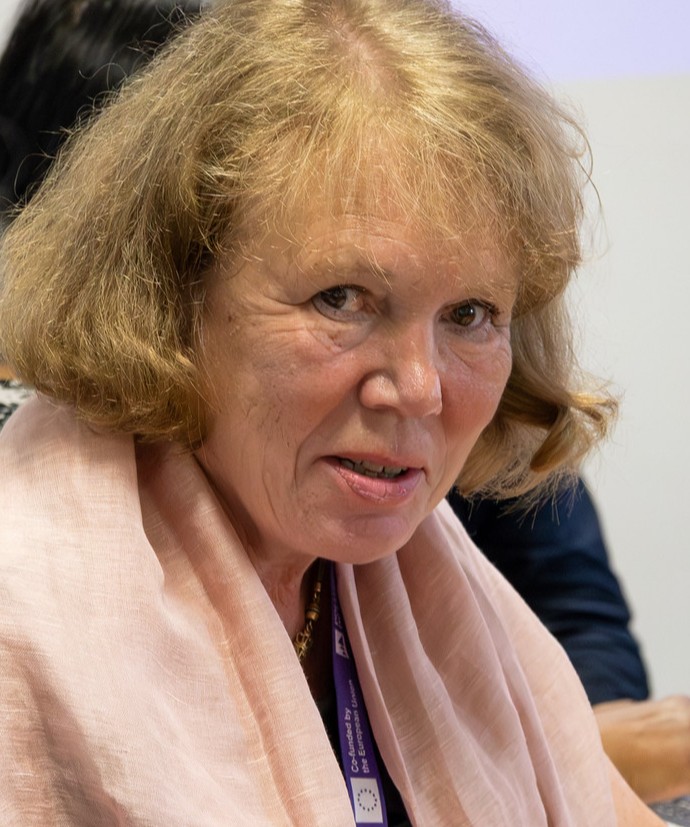
“The creation of the virtual U!REKA Campus is an essential element for the future of our alliance.”
Riitta Konkola, president and CEO Metropolia
What are the main challenges of U!REKA? What are important next steps to be taken for the future?
Riitta: “One of the difficulties we face concerns the differences in traditions and regulations between the partners. For example, it is very complex to offer courses and study programmes at U!REKA level, due to differences in guidelines and structures among the partners and their respective governments, differing academic calendars, and so on. This reality often obstructs faster developments. Nevertheless, the creation of the virtual U!REKA campus is an essential element for the future of our alliance.”
Geleyn: “Furthermore, the U!REKA concept must gain recognition and support among all students and employees of the partners. This is a standard development: the U!REKA European University is relatively new and new initiatives inevitably raise questions and objections, particularly as they grow and acquire greater influence.
Nevertheless, awareness of and engagement with U!REKA have risen sharply. It is also a very significant development that students are involved, for example through the U!REKA Student Council. Creating added value for students through open courses, educational projects and joint initiatives is crucial.
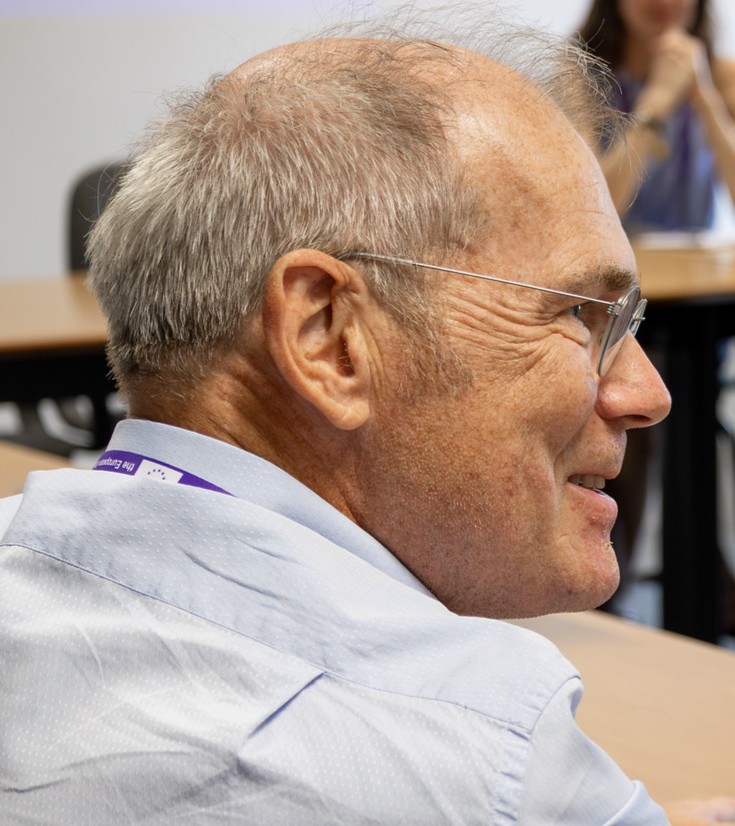
“We must make it clear to our students that they can develop their talents more effectively because of the U!REKA partnership.”
Geleyn Meijer, rector Amsterdam University of Applied Sciences
We must make it clear to them that our partnership offers benefits for them and ensure that they get the feeling they can develop their talents more effectively within the U!REKA European University than elsewhere.
”How do you see the future of the European alliances? Are these initiatives here to stay, bearing in mind that in many European countries there is a nationalist tendency to retreat within one’s own borders (at least as reflected in election results). At the same time, there are severe cost cuttings in education everywhere. Does this threaten the European Alliances (and other EU-initiatives)?
Geleyn: “That is indeed a threat. But it is not something we simply stand by and watch as spectators. We do have a role to play here. We can counter it by incorporating European values into our education policy, for both lecturers and students. In addition, we must keep the dialogue with political actors going. We should not do this in an isolated manner, but together with other European University Alliances. If we can unite with those more than 60 alliances and take a united stand, we will be a powerful voice in the debate. That is one of the reasons why it is a good thing that 4EU4All was established – the organisation that brings together all European university alliances. We need those combined forces.”
Riitta: “An indirect way of dealing with the current political context is to ensure that as many students as possible are attracted to our practice-oriented programmes. We are part of Europe and follow European processes. We also share this – implicitly or explicitly – with the students, who will shape the future.”
What advice would you give to your successors within the U!REKA European University for the coming years?
Geleyn: “My advice is fairly traditional: give processes time to develop and make sure you get everyone on board. But, on the other hand, dare to try new things. Have the courage to take steps forward.”
Riitta: “And to do that, have faith in people. Build connections and nurture them. Say ‘yes’ more often than ‘no’.”